1. in what ways does your media product use, develop or challenge forms and conventions of real media products
Our music video uses most of the conventions and forms that most music videos use, it has a performance part and a narrative side, but unlike some our narrative and performance are happening at the same time, whilst the artist is playing we have the narrative projected behind him against a green screen, whereas with most there might be overlap between performance and narrative, usually there is a separate narrative and performance, with a story being told, which then cuts to shots of the artist performing.
The performance part of the video follows most conventions of music videos in the sense that there is an artist singing and playing an instrument, whereas the narrative is somewhat unique in the sense that it is made up of pictures exclusively, but the pictures don't just appear on the screen for an equal and allotted amount of time, we sped up the speed that the changed, slowing down as well for some of the more shocking images, so the full effect of the image can be seen, we also tried to ensure that a picture doesn't stay on during cuts, where the performer moves but the picture doesn't, we also kept the performance in full cover, but we added an effect to the narrative, giving it a black and white old film style, we got the inspiration of this from Black Stone Cherry's "Things My Father Said" how the music video starts and ends with an old film effect, and how the music video throughout has a slight sepia colour tone, there is still colour but faded like a memory, we did this foremost to separate the performance from the narrative, the song is about war and peace, so we picked pictures associated with war and peace but during one line, the lyrics change to "because this is one short life that we live", so at this point we decided to add pictures of famous music artists that died at a young age, this also i feel adds a bit of freshness to the music video, just to break up the pictures of war, hatred and other atrocities.
We lip Synced to the song, so that when it came to editing, it would be easy to sync the music to the raw footage, because the song is a sombre song, in the acoustic rock genre, we decided against having much movement from the artist, so it was decided that the movement for the video would come from the narrative of the pictures in the background, usually in this style of music the artist doesn't move much so this gave us some freedom when it came to movement to simply take the movement and use it in the background narrative.
For the mise-en-scene because the song and video we imagined, of an every day, working class man, standing up, expressing what he believes, and starting his own peaceful revolution, we decided that he should be dressed in everyday working class clothes, so a white t-shirt with a stormtrooper design and denim jeans was the choice of costume we went with, and we picked a guitar that was not a expessive top of the range guitar but the type of guitar that anyone guitarist could own, that ability to stand up, as you are, and express such a strong belief, a belief that strong it attracts all around who believe in it aswell, we looked at John Frusciantes "The Past Recedes" how he just wakes up like everyone else, wanders around his house, and then sits on the floor to play a beat up old guitar, that idea that it doesn't matter where, when, how your dressed, what you own, just the fact that we are all connected because of music.
For the digipak we decided to keep the theme very simple, like the music video, so we used a simple theme, a plain black background, with a peace symbol on the front cover, only this one is made from bullets, and the centre of the peace symbol is removed from the whole and sits just out of reach almost like a metaphor for peace, how it is so close, but just out of reach and yet to be whole, we also took a line from the song "Can't the whole world love one another, throw down your weapons, fix all the hunger" we picked this because we felt that of all the lines in the song it had the most effect emotionally to the listener even though it is found at the end of the song, it sums up the song and the message of the song, also just behind the cd and on the edge of the digipak we have included more peace symbols to really illustrate the message.
The tour poster we kept in the same theme as the digipak, it has a simple design but the background is grey and black around the edge, the artists name is at the top, with the peace symbol underneath except this time it is complete, giving the impression that during the gig the audience bring peace closer to fruition, and that the time within the gig, brings everyone closer together, that they are the revolution, underneath that we have put the supporting artists and gig dates and links where the tickets can be brought and any information on the artist, also at the bottom left is a picture of the digipak.
Thursday, 10 May 2012

Monday, 7 May 2012
Effects Models
Hypodermic Needle Theory 20's
- A reaction to radio cinema and photography
- No consideration for a persons education, intelligence or experiences
- Assumes audiences are passive and heterogeneous
- Fears audiences will mimic what they see
- Research on hypodermic needle theory showed people did not copy all the they saw so a new theory was required
- Turns out media does not have direct infuence and most people wait for someone else to tell them their opinion on media texts
- Research showed informal, personal contacts were mentioned far more frequently the exposure to radio or newspaper as sources of influence on voting behaviour
- After a generation had grown up with TV now the new theory said media consumption was often secondary
- Diversions - escape from everyday problems and routine
- Personal Relationships - using the media for emotional and other interactions
- Personal Identity - finding yourself reflected in texts, learning behaviour and values from texts
- Surveillance - information which could be useful for living
- Individuals receive and interpret texts
- Their individual circumstances affect their reading
- This leads to different interpretations of the same text
Idea Changes
Our idea was good, but there was a lot
of problems with it, and so we decided to change our idea.
The problems we had with our previous idea were:
- The Lickey Hills Country Park is difficult to get to, it is pretty far from the sixth form and so the amount of filming we would have been able to do would have been limited, we thought that we wouldn't have had enough time to film everything we needed.
- Our idea also contained a lot of people, in this case we would have had to tell everyone to meet at the Lickey Hills Country Park. Since it is difficult to get to, we presumed that not many people would have turned up, making the crowd we wanted look more like a group of friends, rather than anything else.
- Another problem was taking the props and instruments up to the Lickey Hills Country Park. As previously mentioned before, it is difficult to get to, and transporting the instruments would have been extremely difficult.
- At The Lickey Hills Country Park
there is a lot of people who go there for various reasons, we would have
found it difficult to film because of the general public would have
been included within the filming and that would be difficult
especially with continuity errors if we were to re-film certain parts.
So we changed our idea, we wanted to make it simpler but just as good. So we went back to the researching stage and came up with an idea.
Idea 4 and our final idea: After some
discussions, we realised that in our previous idea we were going to
create banners and posters that people would have held up, so instead we
thought about having pictures hanging up on the trees. We then decided
on the location of the filming, we thought about any local parks, and we
came up with Kings Norton Bicycle Path. The path has quite a lot of
trees, with a river running through it. It was the perfect location,
especially since when the sun is shining, it splits through the trees
and lights up the path. Liam will be the musician, he will walk along
the path, as if something has just got him annoyed and this is his way
of reliving the stress he has. He sings Peace Is Free and comes across
photos that are hanging in the trees, that link in with the song.
We inted to use the following
photos as part of our music video:


Tuesday, 6 March 2012
Audience Theory
The Two Questions
Three Different Ways to Consume Media Texts
- How powerful are the media in influencing the ideas and behaviour of the audience?
- how does the media shape an audiences perception of the world?
Three Different Ways to Consume Media Texts
- Primary Media
These texts demand close and concentrated attention from the audience - Secondary Media
These texts provide a background for an audience who are often doing something else at the same time and are distracted - Tertiary Media
These texts are consumed by audiences who are almost unaware of their own engagement with the media
- Hyperdermic Needle Model
- Two Step Flow Model
- Uses And Gratifications Theory
- Reception Theory
Monday, 5 March 2012
Mise-en-scene
Guitarist
The idea of the guitarist is that he is an everyday person, who has seen the world from his own perspective and decided to stand up and start his own revolution against war and hatred and depression, calling on the people to stand with him against the negative aspect of sociat.
Costume
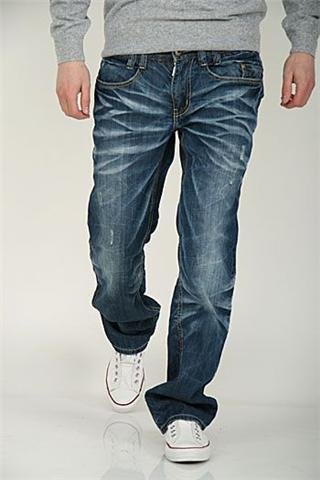
The costume for the performance is a t-shirt with a stormtrooper design and denim jeans, this is to represent youth and the everyday person, the idea that anyone can stand up and sing about peace and war,


Props
The Only prop throughout the music video is the acoustic guitar which the artist used which is a freshman 12 string dreadnought guitar

Pictures
There will be lots of pictures presented against the green screen so i have put together a mood board of some of the pitures that will be featured throughout the video.

The idea of the guitarist is that he is an everyday person, who has seen the world from his own perspective and decided to stand up and start his own revolution against war and hatred and depression, calling on the people to stand with him against the negative aspect of sociat.
Costume
The costume for the performance is a t-shirt with a stormtrooper design and denim jeans, this is to represent youth and the everyday person, the idea that anyone can stand up and sing about peace and war,

Props
The Only prop throughout the music video is the acoustic guitar which the artist used which is a freshman 12 string dreadnought guitar
Pictures
There will be lots of pictures presented against the green screen so i have put together a mood board of some of the pitures that will be featured throughout the video.

Friday, 2 March 2012
Audience Demographic
Our Music video is in the acoustic rock genre, so the audience demographic is most likely going to be;
- Ages 14-30
- White
- working class to lower class
- to both male and female
Thursday, 1 March 2012
Institutions

Kerrang! TV is a digital television station owned by Box Television, which is loosely connected to the
magazine, Kerrang!. As of 2005, all of its programme content
is music videos, the majority of which is open scheduled, for text requests from their
playlist.

MTV Rocks (formerly MTV Two, MTV2 Europe and M2),
is a 24-hour alternative music channel operated by Viacom
International Media Networks Europe. The channel is widely available
throughout Europe on subscription satellite and digital television
services.
Planet Rock is a multiple Sony Award-winning digital radio station in the United Kingdom. The station broadcasts classic rock music. It is available nationally via the Digital One DAB network, and on Virgin Media cable television, on Freesat and Sky, its website and via an Android or iPhone App.
Subscribe to:
Posts (Atom)